It is critical that the control surfaces be properly configured for flight, so I'm summarizing some of the more important details from different areas of the manual here.
NOTE: This is no substitute for using your builder's manual! Always build according to the manual.
Some Critical Dimensions
Elevator Deflection
   Full Up 24 - 26 degrees
   Full Down 28 degrees min. (Be sure that you are getting full 26 degree down elevator and, at least, 21 degrees up elevator.)
Gap between Canard trailing edge and Elevator
   Elevator Neutral Position 0.050”
   Elevator Full Down 0.200”
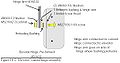
You will note that in the assembly of the elevator - canard hinges, (Figure 14-2) there are 2 washers, one on each side of the elevator mounted hinge. The hinge arm, mounted to the canard, connects to the hinge on the side where the bushing protrudes from the hinge. When installing the assembly, tighten the hinge screw until it is snug, then back it off one-half turn. Lock it in place with the appropriate locknut. It helps to lubricate the screw with some white grease. Once assembled, check the system for binding and full travel.
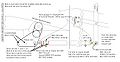
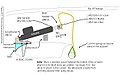
full elevator deflection results in at least 26 degree trailing edge down elevator travel and 23 degree trailing edge up elevator travel. Verify that the keel cutout does not limit travel. We use the cutout in the keel as a control stop so you want to make sure that when you reach your control travel limits your stick hits the edge of the cutout. This will keep a pilot from putting stress on the control system
The rod ends on each end of the tube must have at least bushing, and the jam nut must be installed and locked. The pitch trim is set up so that most of the spring tension is for the down elevator (clear of all wires and plumbing). We install the operation switches to work in the same direction as the elevator; switch up, elevator up (nose down) - switch down, elevator down (nose up).
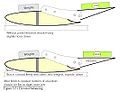
Have the elevators installed loosely on the canard for balancing. Block the canard up on a flat table as you did to check you elevator travel.
Without paint, the elevators should hang slightly nose down. Ideally, with the final finish applied, the elevators should balance bottom side level. A bit nose down is acceptable.
The reason for proper balancing is to prevent flutter. Flutter can occur at high speeds and is aggravated by turbulence. Thus, to achieve the highest safe Vne (Never exceed speed ), all control surfaces must conform to the above balancing criteria.
Elevator Keel Connections